Guest Stay Link: What It Is and Why Hosts Love It
One link for scoped guest self-service — instructions, requests, and payments without turning your phone into the front desk.
· Updated 2026-03-28
Key takeaways
- A stay link reduces fragmented DMs and “lost” instructions.
- Guests get clarity; hosts get fewer interruptions for repeatable questions.
- Scoped access beats broadcasting private info across channels.
One link for scoped guest self-service — instructions, requests, and payments without turning your phone into the front desk.
The useful question is not only whether guest stay link sounds right in theory. It is whether your version still works when the calendar shifts, the cleaner is deciding, or a guest is already expecting an answer.
That is where clearer operating rules help most: they turn a one-time save into something your team can repeat without waiting for the same person to translate the situation again.
What a guest stay link is trying to solve
A stay link is a single canonical place for the guest-facing parts of the trip that should be:
- easy to find
- scoped to the stay
- less dependent on your personal inbox
Host benefits (the real ones)
- fewer repeated questions
- less risk of sending outdated instructions
- cleaner handoffs between co-hosts
- fewer “I didn’t see that message” moments
Guest benefits
Guests want:
- speed
- clarity
- not feeling rude for asking “one quick thing”
A good link respects their time.
How this fits Oordio’s model
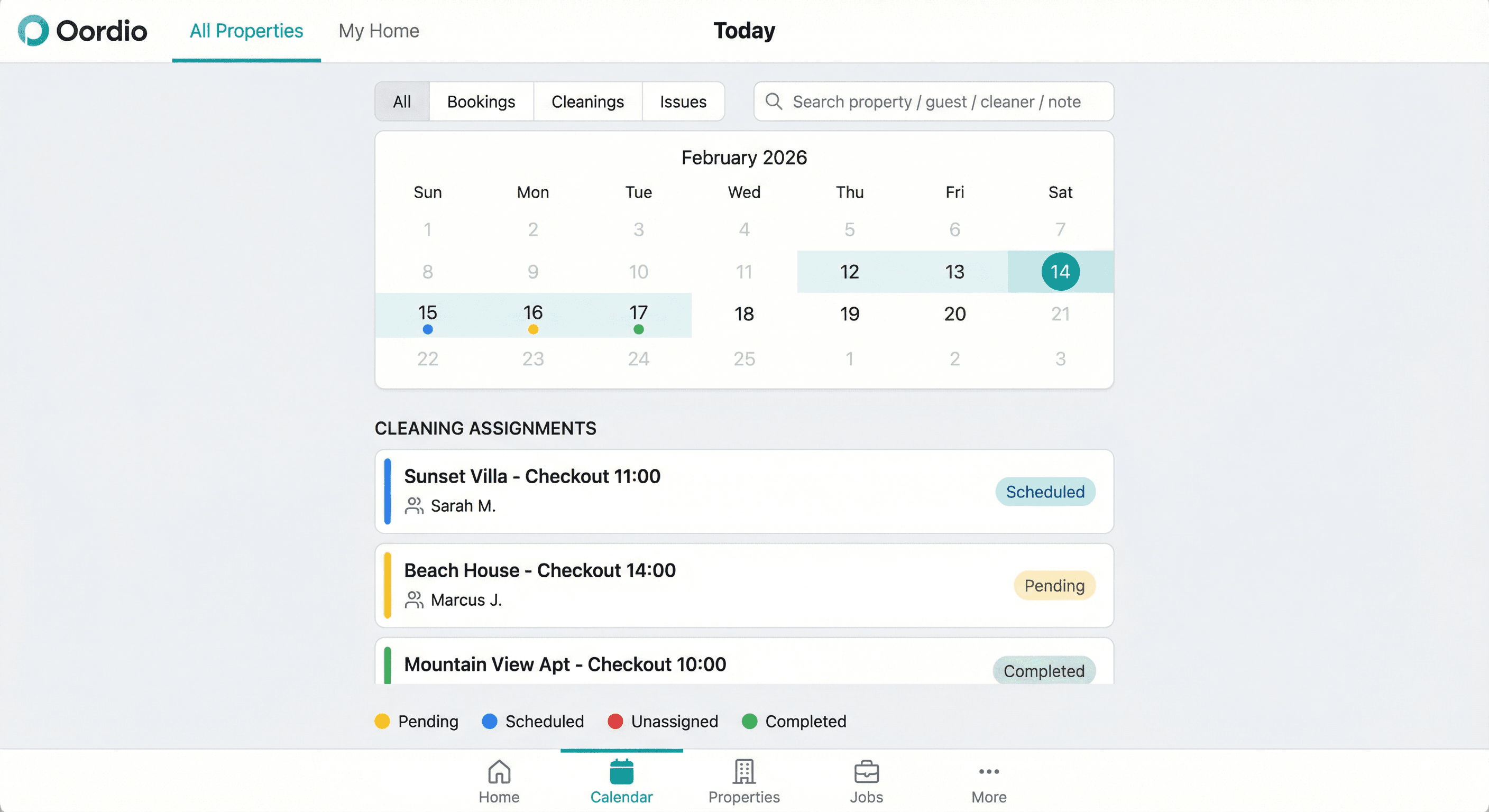
Oordio’s direction is operational: the booking record is the spine, and guest interactions attach to that spine instead of living as unrelated chats.
See the product walkthrough: Guest link.
Where the Advice Usually Gets Tested
A guide becomes useful only when it survives a real turnover, a real guest question, or a real schedule change.
Start with the first principle: A stay link reduces fragmented DMs and “lost” instructions. This matters because guides fail when the advice sounds right on paper but nobody can find the rule when the day gets busy, and around guest stay link the difference between a calm day and a scramble is usually whether that rule was clear before the pressure showed up.
The next idea matters just as much: Guests get clarity; hosts get fewer interruptions for repeatable questions. This matters because guides fail when the advice sounds right on paper but nobody can find the rule when the day gets busy, and around guest stay link the difference between a calm day and a scramble is usually whether that rule was clear before the pressure showed up.
The third point is really about consistency: Scoped access beats broadcasting private info across channels. This matters because guides fail when the advice sounds right on paper but nobody can find the rule when the day gets busy, and around guest stay link the difference between a calm day and a scramble is usually whether that rule was clear before the pressure showed up.
A Simple Starting Framework
If you want this topic to become repeatable, start by naming three things in writing: the trigger, the owner, and the deadline. That turns a nice idea into an operating rule the next person can actually follow.
Most hosts do not need a giant SOP first. They need one place where the current version of the rule lives, one person who updates it, and one backup path when the plan slips. Around guest stay link, that usually means deciding what information is required, who owns the next step, and what happens if the first plan fails.
- Write the current rule for guest stay link in one shared place.
- Name who owns the next move when something changes.
- Set a deadline or cutoff so the backup path is obvious.
What To Watch on the Next Live Run
The fastest way to improve a guide is to watch where it breaks during a live scenario. Confusion is useful data: it tells you which part of the rule still lives only in your head.
- A guest or cleaner still needs to ask who owns the next step.
- The deadline is implied instead of written down.
- You solve the problem once, but nobody can repeat the fix next week.
Read Next
Put This Into Practice
Pick one live workflow from this article and turn it into something your team can reuse without you: a checklist line, a saved message, a property note, or a written cutoff.
You do not need a full documentation sprint. You need one sharper rule that lowers the number of clarifying messages the next time the same situation appears.
- Write the rule where your team already looks for turnover truth.
- Test it on the next real booking, turnover, or guest request.
- Tighten the wording based on where people still hesitated.
How Oordio Fits
Oordio keeps booking times, guest requests, cleaner assignment, and payout status in one operating record so the rules from this guide are easier to repeat without extra message chasing.